Low-pressure house washing, often referred to as “softwashing,” is a cleaning method used to remove dirt, algae, mould, mildew, and other contaminants from the exterior surfaces of homes without causing damage. It contrasts with high-pressure washing, which uses a forceful jet of water to clean surfaces and can potentially damage delicate materials if not done correctly.
When there are plants and other vegetation around the house, the process involves pre-wetting and post-wetting to protect the plants from the cleaning solutions used in softwashing.
Here’s a breakdown of the softwashing process, including the steps to protect nearby plants:
The process:
1. Preparation:
Remove Obstacles: Move or cover items that shouldn’t get wet or might be damaged.
2. Protect Plants – Pre-Wetting:
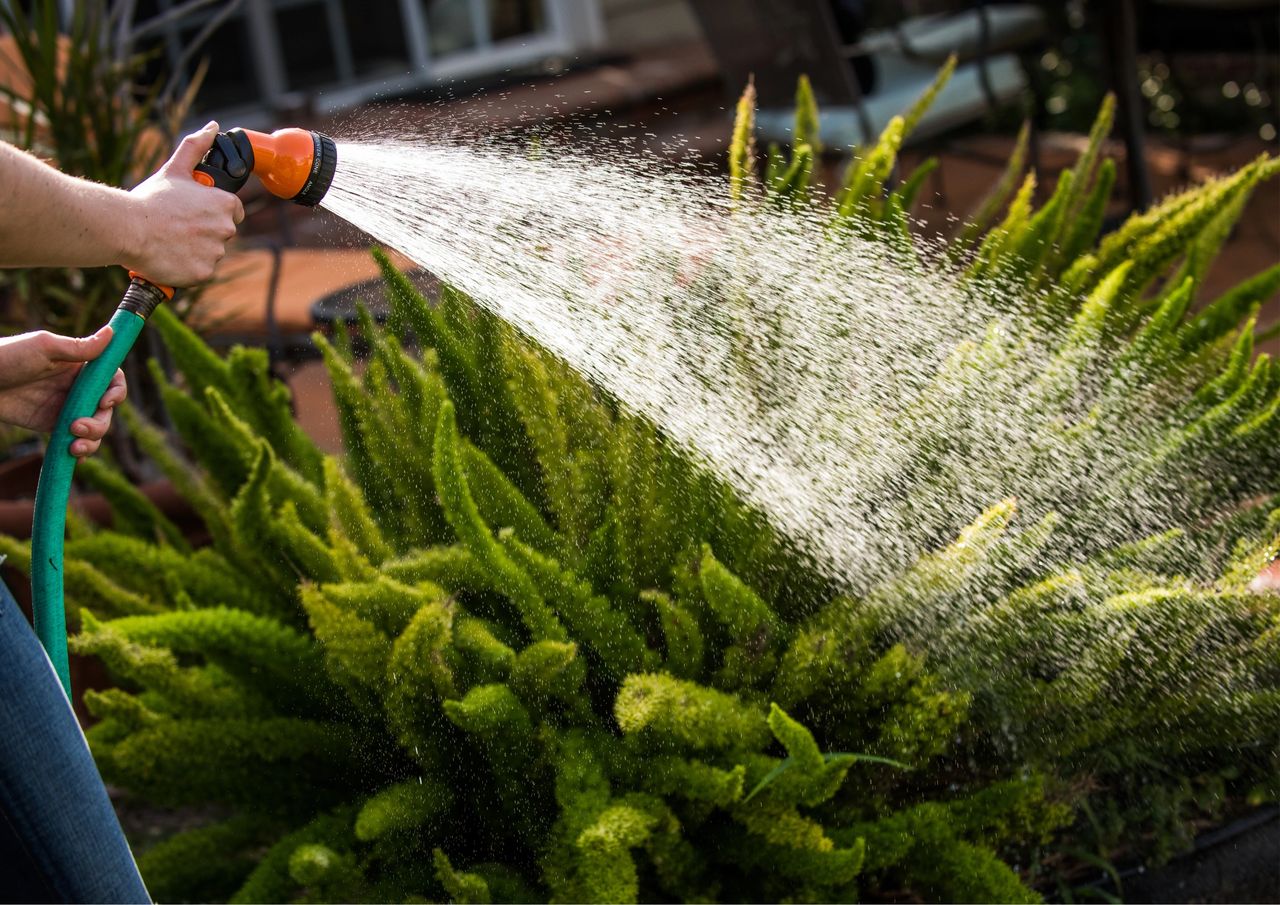
Before applying any cleaning solutions, thoroughly water all plants, shrubs, and grass near the cleaning area. This pre-wetting helps to hydrate the plants and creates a barrier, making it harder for the cleaning solution to adhere to them.
3. Softwashing Application:
The cleaning solution is applied to the surface with a low-pressure wash. It effectively dissolves and washes away the dirt and organic material.
4. Rinsing:
Using a low-pressure water wash, rinse the cleaning solution off the surface to remove all the dirt and residue.
5. Protect Plants – Post-Wetting:
After rinsing, it’s crucial to water the plants, shrubs, and grass again thoroughly. This post-wetting process helps to dilute any cleaning solution residues that might have come into contact with the plants, further protecting them from potential harm.
The cleaning Solution:
A softwash cleaning solution usually contains the following:
Sodium Hypochlorite or bleach effectively kills bacteria, fungi, mould, viruses, algae, moss, and mildew. It is also used in sanitising swimming pools, commonly known as chlorine.
Water is used to dilute bleach—the primary solvent and carrier for the cleaning agents.
Surfactant is used to help the cleaning process, to trap dirt and remove it from the surface. It is commonly found in many household products, such as dishwashing liquid, laundry detergent, shampoo and cleaning products.
Benefits of low-pressure house washing include:
Safety for Delicate Surfaces: Because it uses less pressure, soft washing reduces the risk of damaging surfaces.
Effective Cleaning: The cleaning solutions used in soft washing target specific contaminants, making them particularly effective at removing organic growth like mould, mildew, and algae.
Longer-lasting Results: Because soft washing addresses the root of the problem (like algae and mould spores), the results often last longer than high-pressure washing alone.
If you’re considering low-pressure house washing, please ensure the service provider is experienced and trained about the appropriate exterior cleaning techniques for your home type. If you need house washing services, please consider Softwash Pro for your next cleaning project.


.png/:/cr=t:0%25,l:0%25,w:100%25,h:100%25/rs=w:1280 "What is low-pressure House Washing | The Process and Benefits")