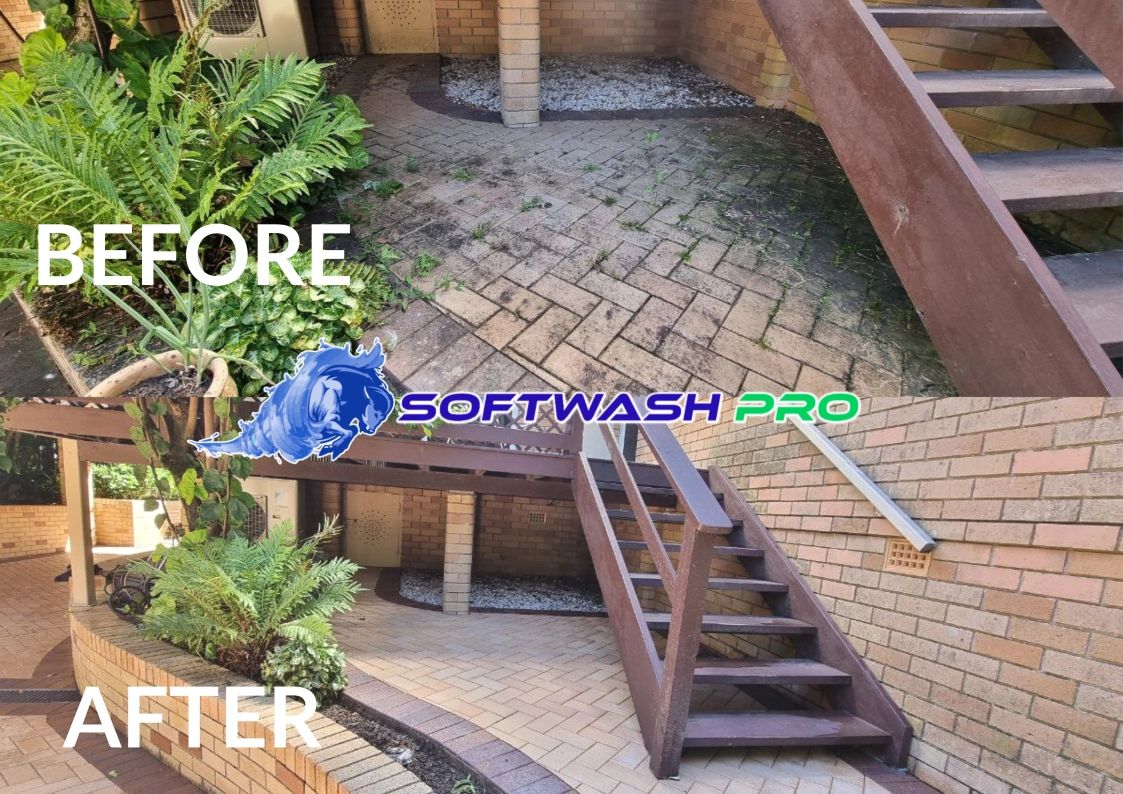
Does softwashing kill grass? If not properly managed, it can harm or kill surrounding grass and plants. Softwashing is a cleaning technique that uses low-pressure water combined with specialised solutions, typically containing bleach (sodium hypochlorite), to clean exterior surfaces such as roofs, sidings, fences, pergolas, awnings, decks, windows and more.
What can we do to protect grass and plants when softwashing:
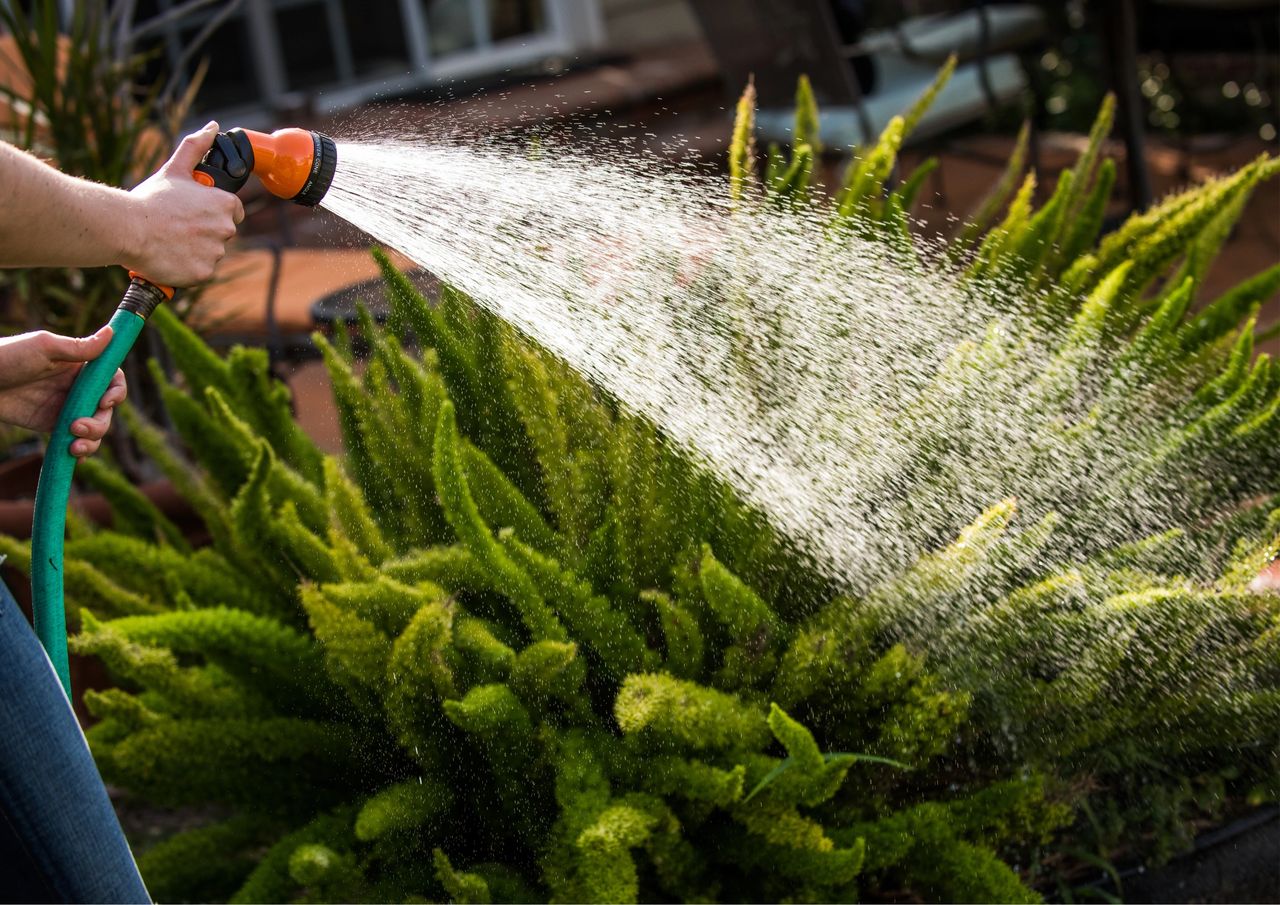
For plants that cannot be removed or covered by the overspray, necessary procedures must be done before softwashing. Pre-wetting and post-wetting plants during the softwashing process serve essential protective purposes for the vegetation:
Prewetting (Pre-soaking):
Dilution: Wetting the plants before applying softwash solutions helps dilute any potential overspray that might come into contact with the grass and plants. A wet leaf or plant will absorb less of the harmful solution than a dry one. Think of it as spilling a drop of juice in a full glass of water versus a nearly empty one. The concentration in the full glass will be way lower.
Barrier Formation: When plants are thoroughly soaked, a thin film of water forms on their surfaces, acting as a temporary barrier. This can cause some of the softwashing solution to run off instead of being immediately absorbed.
Post-wetting (Rinsing):
Neutralizing Effects: Thoroughly rinsing plants after softwashing helps to wash away as much bleach as possible. This is crucial to prevent prolonged exposure, leading to chemical burns or other plant damage.
Dilution, Again: If they were pre-wetted, this step becomes much more effective, just like it’s easier to rinse a dish that’s been soaked in water than one that’s bone dry.
Both pre-wetting and post-wetting are essential best practices in softwashing to ensure the safety and health of the surrounding vegetation. Properly watering plants before and after the application of cleaning solutions can make a significant difference in preventing damage.
Why Softwashing Your Home’s Exterior? The benefits
While it’s important to take precautions to protect plants and grass during softwashing, the benefits of softwashing your home are numerous and significant. Here are a few key advantages:
Effective Cleaning: Softwashing is highly effective at removing dirt, algae, mould, mildew, and other organic stains from exterior surfaces. This method is especially good at tackling areas where these contaminants are stubborn and hard to remove.
Surface Safety: Unlike high-pressure washing, softwashing uses lower water pressure, significantly reducing the risk of damaging delicate surfaces.
Longer Lasting Results: The cleaning solutions used in softwashing do more than just clean the surface; they kill the spores of mould, algae, and other growths.
Health and Safety: Softwashing can contribute to a healthier environment around your home by removing harmful substances like mould and algae. These substances can be slippery and hazardous, and some, like certain moulds, can pose health risks.
Curb Appeal and Property Value: A clean, well-maintained exterior significantly boosts curb appeal, which can be vital if you plan to sell your home. Even if you’re not selling, the aesthetic improvement benefits you and your neighbourhood.
Avoiding Unnecessary Repair Costs: Regular softwashing can help you avoid costly repairs. By keeping the exterior of your home clean, you prevent the build-up of harmful substances that can cause long-term damage. By addressing these issues early and regularly through softwashing, you can extend the life of your home’s exterior components, ultimately saving money on repairs and replacements.
In summary, while it’s crucial to use softwashing correctly to protect plants and grass, the method offers an effective way to maintain and clean your home’s exterior, contributing to its aesthetic and functional value.